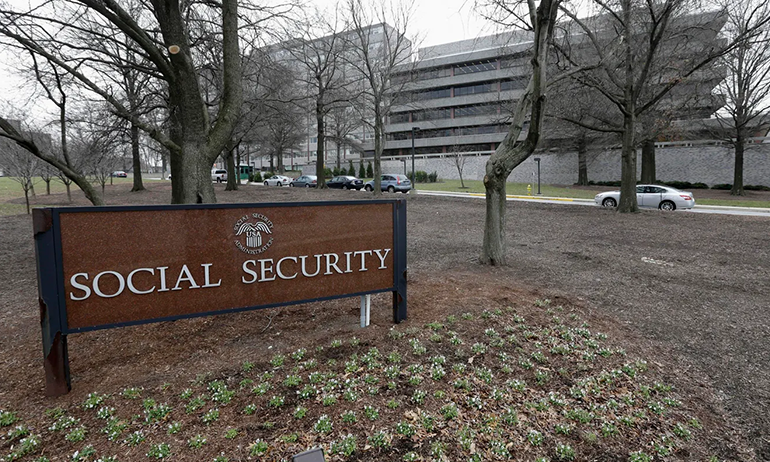
Future of Social Security: A Looming Crisis
The Social Security Administration (SSA) delivered some alarming news in its latest report to Congress: the funds that support nearly 67 million Americans in benefit payments could be exhausted by the year 2035. This revelation raises significant concerns about the future of financial support for retirees and other beneficiaries.
Potential Fallout If No Action is Taken
If lawmakers do not intervene in time, the only source of funding for these vital payments will be payroll taxes and other forms of income. Unfortunately, should this funding gap remain unaddressed, the SSA indicates that only about 83% of the promised benefits will be met. The clock is ticking, and the urgency for solutions grows each day.
A Silver Lining: A Brief Reprieve
Amidst the troubling forecast, there's a hint of good news. Last year, projections suggested that the trust funds would face depletion in 2034, but the latest findings extend that timeline to 2035. This delay is attributed to a robust economy and increasing wage growth, providing a bit of breathing room in an otherwise tense scenario.
The Trust Funds: What’s at Stake?
The Social Security program is underpinned by two key trust funds: the Old-Age and Survivors Insurance Trust Fund (OASI), created in 1940, and the Disability Insurance Trust Fund (DI), established in 1957. Together, these trust funds hold a staggering total of $2.788 trillion, although they have taken a hit, losing $41 billion in 2023 alone.
Income and Expenditure: A Widening Gap
In 2023, the Social Security program disbursed a significant $1.379 trillion to beneficiaries. However, when accounting for administrative expenses, the total spending reached $1.392 trillion, highlighting a worrying trend. The program's revenue for the year amounted to $1.351 trillion, predominantly from payroll taxes collected from around 183 million workers, supplemented by taxes on benefits and interest from reserves.
A Persistent Shortfall
It's worth noting that this $41 billion gap isn't a one-off occurrence. Since 2010, program costs have consistently outstripped non-interest income, and since 2021, expenditures have surpassed overall income. According to projections, the situation is set to deteriorate further, with expenses projected to exceed revenue for the long haul.
The Demographic Challenge Ahead
As birth rates decline and the number of retirees rises, the financial disparity within the program is expected to intensify. Currently, there are 36 beneficiaries for every 100 workers, but that ratio is anticipated to rise to 42 by 2035 and could peak at an alarming 49 beneficiaries per 100 workers by 2085.
Congress at a Crossroads
With pressing challenges at hand, Congress has several strategies to consider in order to prolong the life of the trust funds and establish a more sustainable trajectory for Social Security. However, any potential solutions come with considerable political risks, particularly in an election year. Options under consideration include increasing payroll deductions for current workers or raising the retirement age—a tough battle reminiscent of the reforms made in 1983, when Congress increased the full retirement age from 65 to 67 over a phased timeline.